
 01
Closely Watched Trains
Why this pick
This Czech wartime tragicomedy shares its intimate provincial setting, deceptively gentle humor and gradual collision between everyday awkwardness and Nazi occupation.
 cinehunch
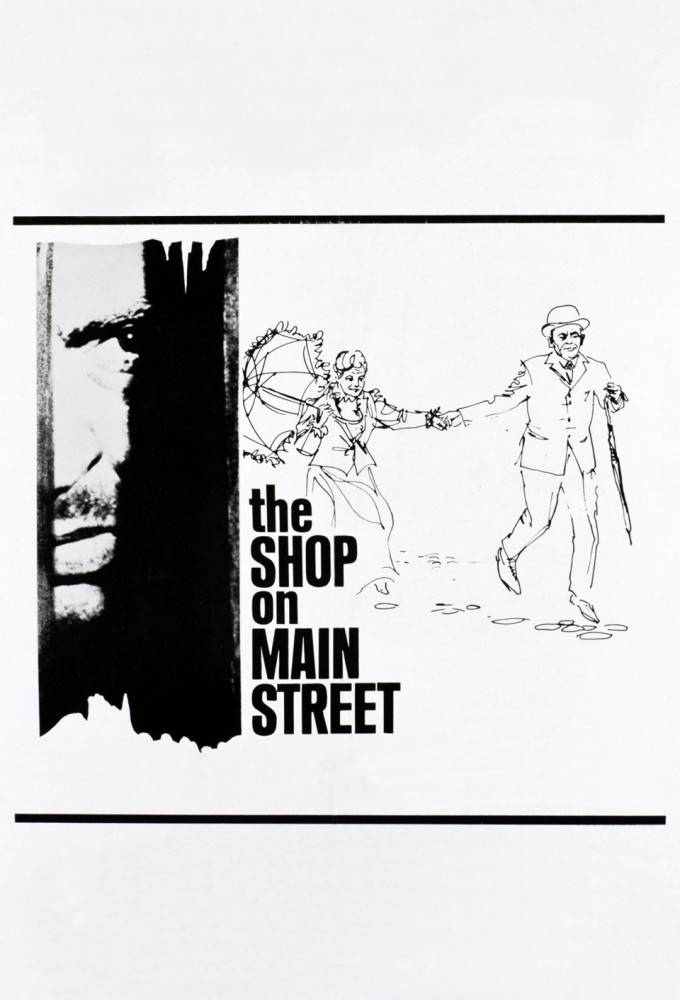 A FILM WORTH A CLOSER LOOK
THE FEATURE PRESENTATION
IF THIS ONE STAYED WITH YOU
Keep the feeling.
SIMILAR PICKS / A PERSONAL CONNECTION
01
Why this pick
This Czech wartime tragicomedy shares its intimate provincial setting, deceptively gentle humor and gradual collision between everyday awkwardness and Nazi occupation.
 02
Why this pick
A psychologically rich study of how fear and the wish to belong can make an ordinary man serve fascism, rendered with the same chilling moral seriousness but in more stylized images.
 03
Why this pick
Its focus on one family caught in state violence echoes the intimate scale and ethical anguish of The Shop on Main Street, with institutions becoming terrifying through their effect on daily life.
 04
Why this pick
Another occupation-era drama in which work, performance and private loyalties become means of survival; it balances restrained suspense with humane attention to people navigating coercion.
 05
Why this pick
Wajda examines political terror through families left to endure its consequences, matching the original’s grave compassion and refusal to make historical catastrophe emotionally abstract.
Finding the atmosphere, tension and little details that made this one stay with you.
Our curator needs a little longer. Please come back shortly.
No confident matches yet. Try our personal film finder.
01 / THE STORY
During World War II, a mild-mannered Slovaks carpenter Anton "Tóno" Brtko (Jozef Kroner) is offered the chance to take over the sewing notions store of an old, near-deaf Jewish woman Rozália Lautmannová (Ida Kaminska) as a part of the enactment of an Aryanization (Nazism) regulation in the town. As Tóno attempts to explain to Mrs. Lautmannová, who is oblivious of the world outside and generally confused, that he has come to be her supervisor and owner of the store, Imrich Kuchár (Martin Hollý, Sr.), a Slovak opponent of Aryanization, steps in and reveals to Brtko that the business itself is less than profitable, as Lautmannová herself relies on donations. The Jewish community then offers the amiable Brtko a weekly payment if he does not give up the store, which would otherwise be given to a new, possibly ruthless Aryanizer. Tóno accepts and lets Mrs. Lautmannová believe he is her nephew who has come to help in the store. Their relationship grows, until the authorities round up the town's entire Jewish population for transport, and Tóno finds himself conflicted as to whether he should turn in the senile Mrs. Lautmannová, or hide her. When the woman finally becomes aware of the "pogrom" all around her, she panics, and in attempting to silence her, Tóno accidentally kills her. The realization devastates him, and he hangs himself.
Showing saved details. Some information may be out of date.
02 / FACES IN THE FRAME

Antonin 'Tono' Brtko