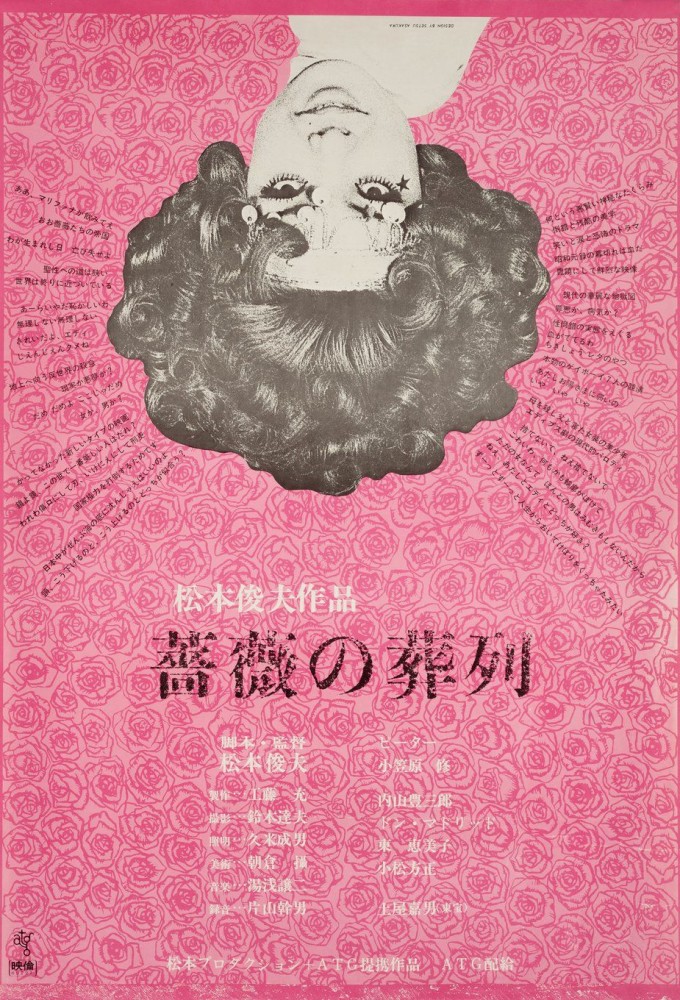
Heroic Purgatory
Why this pick
Yoshida again fractures time, political memory and intimate relationships into a cool, elusive modernist puzzle, with the same rigorous widescreen compositions and restless questioning of revolutionary ideals.
A FILM WORTH A CLOSER LOOKTHE FEATURE PRESENTATION
IF THIS ONE STAYED WITH YOU
Keep the feeling.
SIMILAR PICKS / A PERSONAL CONNECTION
Why this pick
Yoshida again fractures time, political memory and intimate relationships into a cool, elusive modernist puzzle, with the same rigorous widescreen compositions and restless questioning of revolutionary ideals.
Why this pick
A similarly audacious historical portrait from Yoshida: radical thought, erotic obsession and state violence are rendered in stylised colour tableaux rather than conventional biography.
Why this pick
Its unstable investigation into a dead radical’s filmed traces shares Eros + Massacre’s fusion of politics, desire and historical inquiry, while formally challenging any single reliable perspective.
Why this pick
Terayama turns recollection into a theatrical, vividly artificial labyrinth where past selves confront the present—an equally daring, sensual alternative to straightforward historical narrative.
Why this pick
Its documentary-fiction collisions, confrontational New Wave energy and fluid shifts in identity make it a strong match for the intellectual playfulness and radical form of Eros + Massacre.
Finding the atmosphere, tension and little details that made this one stay with you.
Our curator needs a little longer. Please come back shortly.
No confident matches yet. Try our personal film finder.
01 / THE STORY
The film is a biography of Anarchism Sakae Osugi, who was assassinated by the Japanese military in 1923. The story tells of his relationship with three women: Hori Yasuko, his wife; Noe Ito, his third lover, who was to die with him; and his jealous, second lover, Kamichika Ichiko, a militant Feminism who attempts to kill him in a tea house in 1916. Parallel to the telling of Ōsugi’s life, two students (Eiko and Wada) do research on the political theories and ideas of free love that he upheld. Some of the characters from the past and from the present meet and engage the themes of the film.